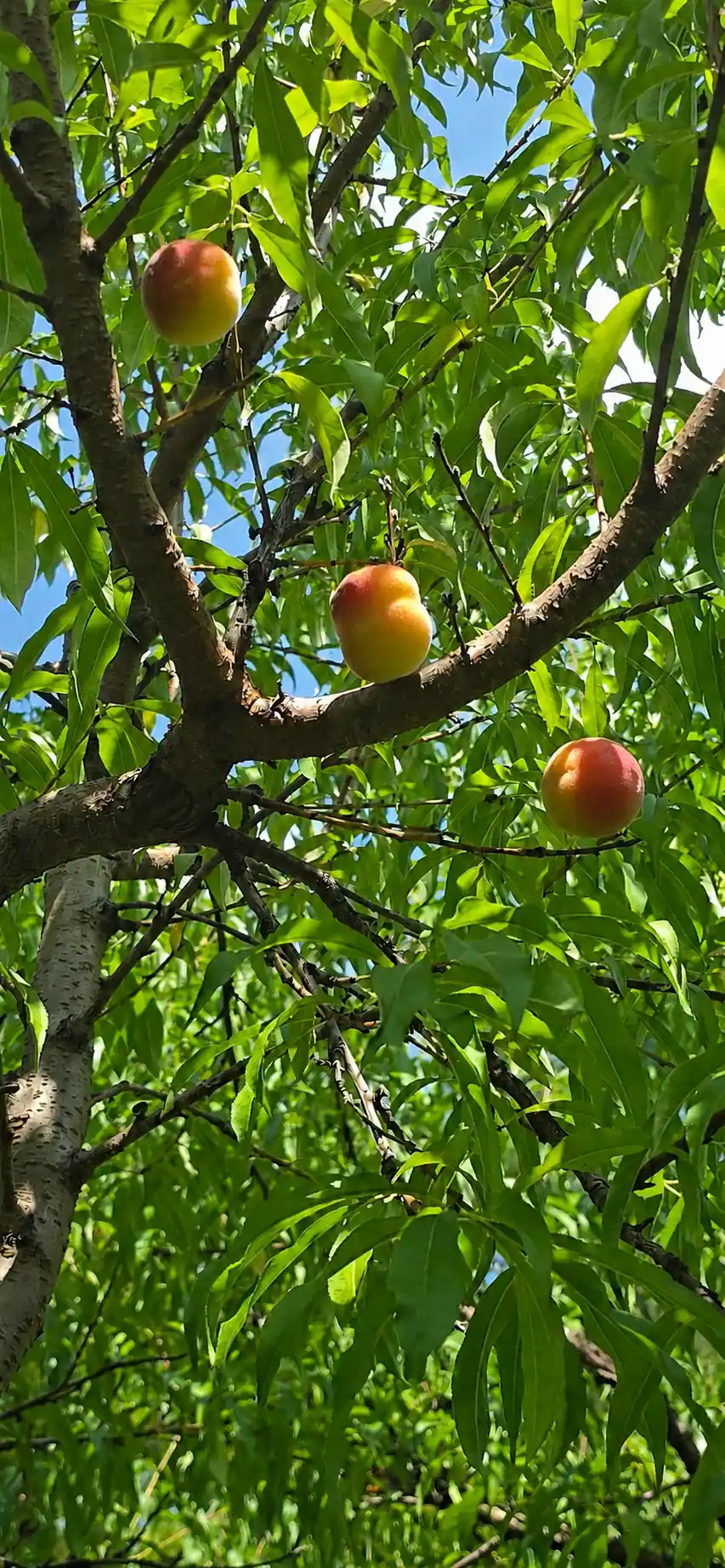
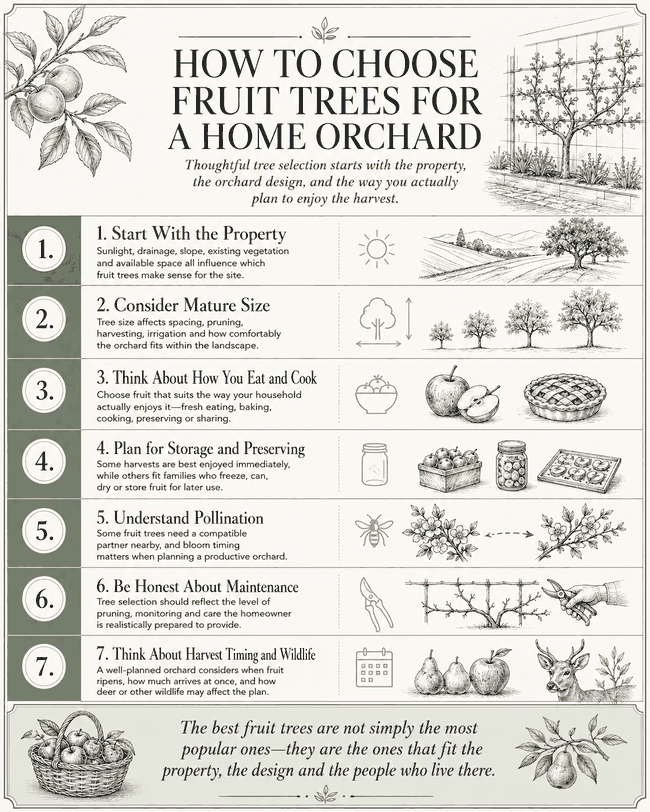
Choosing fruit trees for a home orchard in Bucks County, PA, is not as simple as picking a few favorites and finding a place to plant them. The right fruit trees should fit the property, the orchard design, the amount of maintenance you are comfortable with and, just as importantly, the way you actually like to eat and use what you grow.
At PLANT Design Group, we look at tree selection as part of the larger orchard plan. Before choosing individual trees, we consider the site, available space, sunlight, drainage, pollination, maintenance expectations, harvest timing and the role the orchard will play within the landscape. A well-planned orchard should feel like it belongs to the property and to the people who live there.
Start With the Property Before Choosing Fruit Trees
Before choosing any fruit trees, the first question should be whether the property itself can support the orchard you have in mind. Sunlight, drainage, slope, existing trees, surrounding vegetation and available space all influence which trees may be appropriate. The orchard also needs to work within the larger landscape.
At PLANT Design Group, we look at where the orchard will be seen from the house, how people will move through it, how it connects to gardens and outdoor living areas and whether the available space can comfortably support the mature size of the trees. That is why we believe orchard design should come before tree selection. Once the layout is established, it becomes much easier to choose trees that fit the plan instead of trying to redesign the property around trees that have already been purchased.
Choosing the Right Size Fruit Trees for a Home Orchard
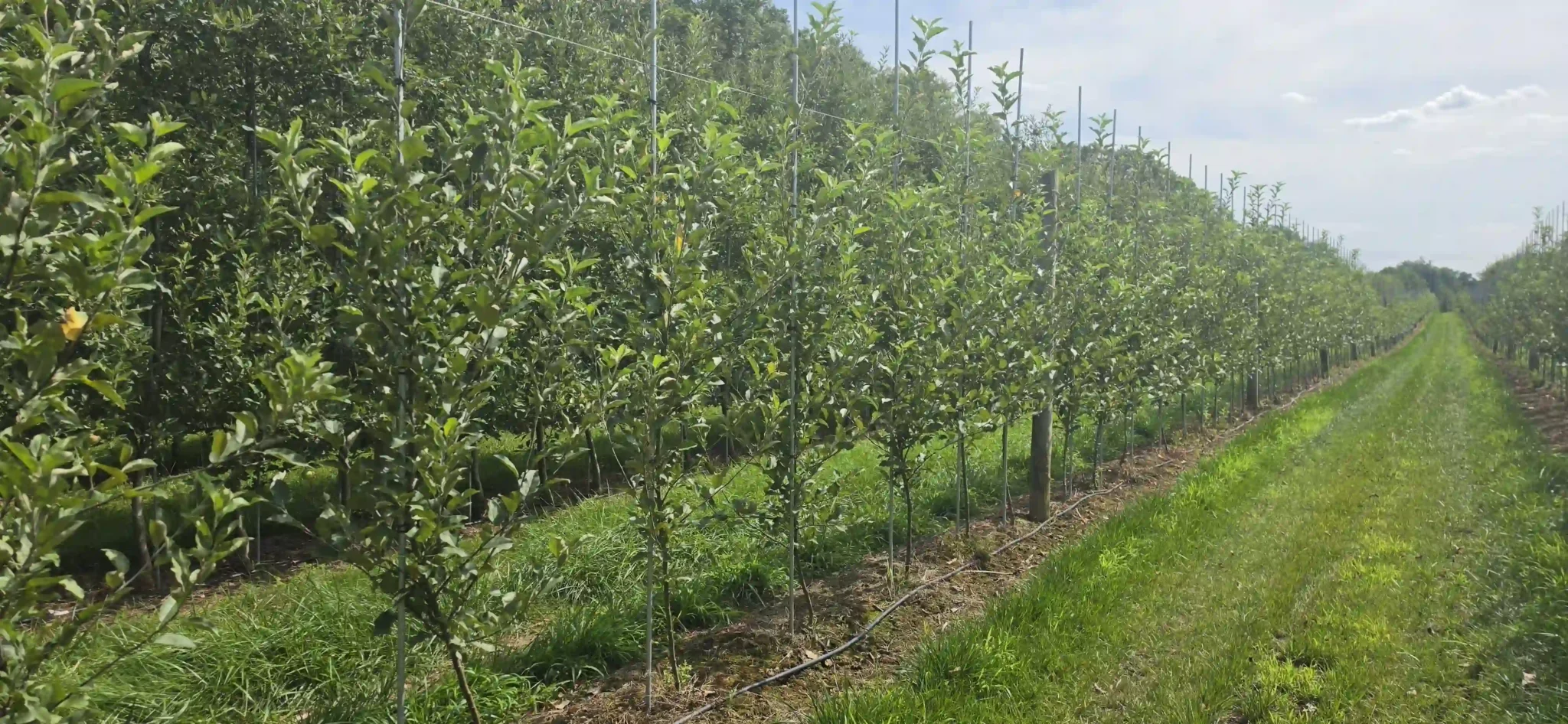
One of the most important considerations when selecting fruit trees for a home orchard is mature size. Dwarf, semi-dwarf and larger-growing fruit trees can create very different orchard experiences. On a smaller Bucks County property, a more compact tree may allow the homeowner to create an orchard without overwhelming the landscape. Tree size also affects spacing, pruning, harvesting, irrigation and the amount of room needed for circulation and maintenance.
The goal is not simply to fit as many trees as possible into the available space. The goal is to choose trees that will still make sense years from now when they have matured and become an established part of the property.
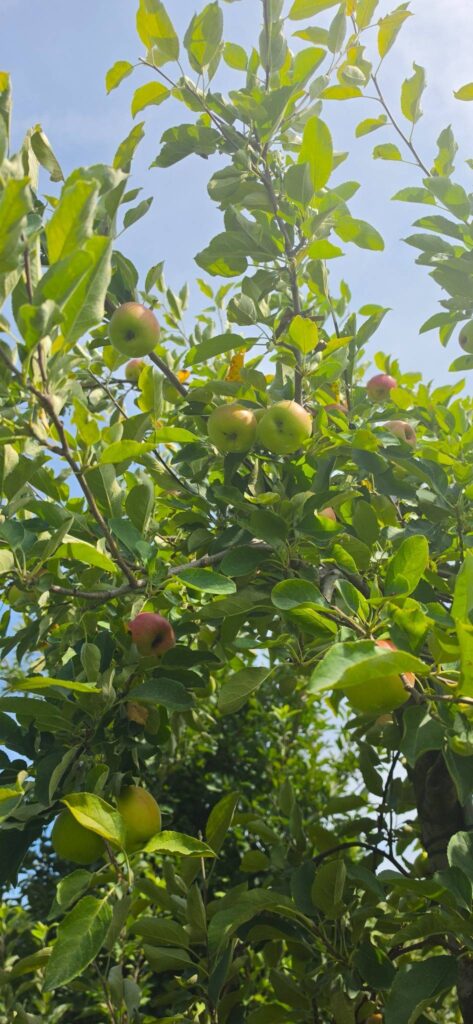
Think About How You Actually Like to Eat and Cook
This is one of the most enjoyable parts of orchard planning, and it is also one of the most personal. Before choosing fruit trees, think about what your family actually enjoys eating.
Do you prefer fruit that is sweet and mild, or do you like something with a little more tartness?
Are you imagining fruit picked from the tree and eaten fresh, or are you more interested in baking, cooking or preserving?
Someone who dreams of making pies, crisps, sauces or preserves may make very different choices from someone who simply wants fruit to snack on during the summer. The same is true if you enjoy cooking with fruit as part of savory dishes, making chutneys or serving fruit alongside cheeses and seasonal meals.
At PLANT Design Group, these conversations help us understand what the orchard is really meant to provide. Tree selection should reflect the way the homeowner lives, cooks and eats rather than simply following a generic list of popular fruit trees.
Consider How You Plan to Store and Preserve the Harvest
Harvest is only part of the story. It is also worth thinking about what you plan to do with the fruit once it comes into the house. Some homeowners want fruit they can enjoy immediately. Others may be interested in produce that stores well, can be refrigerated for longer periods or works well for canning, freezing, drying or preserving. If you enjoy putting food away for later in the year, that should influence how the orchard is planned.
A homeowner who likes making jams or preserves may have different priorities from someone who prefers fresh fruit throughout the season.
Storage space matters too.
Do you have a second refrigerator, cool basement, pantry, freezer or other area where harvested fruit can be stored?
Thinking about these practical details before choosing trees can help create an orchard that produces food you will actually use rather than more fruit than you know what to do with.
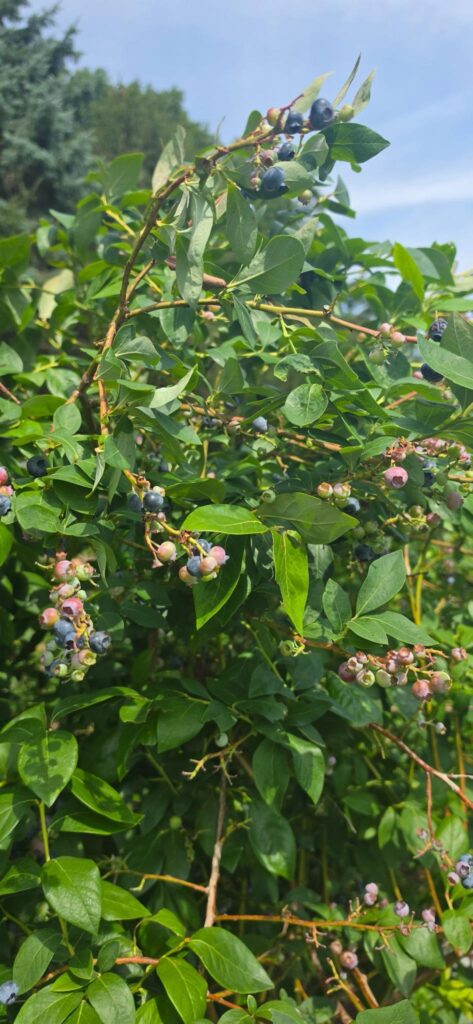
Understand Pollination Before Selecting Fruit Trees
Pollination is one of the most important parts of fruit-tree selection and one of the easiest details to overlook. Some fruit trees can produce on their own, while others require another compatible tree nearby for successful pollination. Bloom timing can also matter. Two trees may both be appropriate for Bucks County, but that does not automatically mean they will be good pollination partners.
This is one reason we do not recommend selecting trees one at a time without considering the orchard as a whole. Pollination requirements should be planned along with tree placement, orchard size and the homeowner’s goals. The right combination can help create a more dependable orchard while avoiding unnecessary trees that do not contribute to the overall plan.
Consider How Much Orchard Maintenance You Want
Not every homeowner wants the same level of involvement with their orchard. Some people enjoy pruning, monitoring their trees and spending time maintaining the orchard throughout the season.
Others want a more manageable landscape that does not require constant attention. That difference should influence tree selection. Disease resistance, pruning needs, pest pressure, fruit thinning and general maintenance expectations can vary considerably.
At PLANT Design Group, we believe it is important to have an honest conversation about maintenance before the orchard is planted. A beautiful orchard that requires more care than the homeowner realistically wants to provide may eventually become frustrating. The better approach is to design an orchard that fits both the property and the amount of care the homeowner is comfortable giving it.
Plan for Harvest Timing
Another consideration is when the fruit will be ready to harvest. If everything ripens at the same time, a home orchard can suddenly produce far more fruit than a family can reasonably eat or store.
For some homeowners, that is exactly what they want. They may enjoy a concentrated harvest season for preserving, baking or sharing fruit with family and friends.
Others may prefer a more gradual harvest that provides fruit over a longer period. Thinking about harvest timing can help shape the orchard around the homeowner’s lifestyle. It can also make the orchard more enjoyable by extending the season rather than concentrating everything into a few busy weeks.
Disease Resistance Matters in a Bucks County Home Orchard
Disease resistance is another important consideration when choosing fruit trees for a residential orchard. Bucks County’s climate can create conditions where certain diseases and pests become more challenging. That does not mean homeowners need to become orchard experts, but it does mean tree selection should take local growing conditions into account.
For many residential clients, we look for ways to create an orchard that is easier to manage without sacrificing beauty, productivity or flavor. Choosing trees with appropriate disease resistance can be part of that strategy.
The goal is not to eliminate maintenance altogether, but to make the orchard more practical for the homeowner who will be living with it year after year.
Plan for Deer and Wildlife Before Choosing Trees
Deer pressure is a reality on many properties in Bucks County. Wildlife protection should therefore be considered before trees are selected and planted. Young trees can be especially vulnerable, and waiting until damage occurs can limit the available solutions. Depending on the site, fencing or other forms of protection may need to become part of the orchard design from the beginning.
This is another reason tree selection should not happen in isolation. The orchard layout, pathways, fencing, surrounding plantings and views from the house all need to work together. Protection should be effective while the orchard still feels connected to the rest of the landscape.
Tree Selection Should Follow the Orchard Design
One of the most important principles in residential orchard planning is simple: Design the orchard first. Then choose the trees that make sense for the property and the people who will enjoy it.
The orchard layout determines how much space is available. The property determines the sunlight, drainage and growing conditions. The homeowner determines how much maintenance is realistic, how the fruit will be used and what kind of orchard experience they want.
Once those pieces are understood, tree selection becomes much more intentional. Instead of asking, “Which fruit trees do I like?” the better question becomes:
Which fruit trees make sense for this property, this design and this homeowner?
That is a very different way to plan an orchard.
Choosing Fruit Trees With PLANT Design Group
At PLANT Design Group, we do not begin a home orchard with a generic list of favorite fruit-tree varieties. We begin with the property and the people who will be using it.
We look at the site, the orchard layout, mature tree size, pollination needs, maintenance expectations, harvest timing, wildlife pressure and the way the homeowner likes to cook, eat, preserve and store food. From there, we can narrow the choices to fruit trees that make sense for that particular orchard. The result is an orchard that feels more personal, more manageable and more connected to the landscape around it.
Because the best home orchard is not simply the one with the most fruit trees. It is the one that was designed thoughtfully from the beginning.