How to Design a Home Orchard in Bucks County, PA
Designing a home orchard in Bucks County, PA, takes more than simply planting fruit trees. A successful residential orchard begins with thoughtful landscape design that considers the best location, sunlight, drainage, orchard layout, pathways, irrigation, deer protection and how the orchard fits into the rest of your property. At PLANT Design Group, we design home orchards as an intentional part of the landscape, creating spaces that are not only productive, but beautiful, functional and connected to the way you live outdoors.
A home orchard should certainly be productive, but it should also belong to the property.
Choosing the Best Location for a Home Orchard in Bucks County
The location of a home orchard is one of the most important decisions in the entire design.
Fruit trees need adequate sunlight, but sunlight is only part of the equation. Drainage, slope, existing trees, surrounding vegetation, access and the relationship between the orchard and the rest of the landscape all need to be considered before planting begins.
At PLANT Design Group, we also look at the property from the homeowner’s point of view.
Will you see the orchard from the kitchen, terrace or patio? Will you walk through it on the way to another garden? Could the orchard be positioned so that the rows of trees create a beautiful view across the property?
These are landscape design decisions just as much as they are horticultural ones.
When we plan an orchard within a residential landscape, we look beyond the trees themselves. Views from the house, circulation through the property, surrounding plantings and the relationship between the orchard and outdoor living spaces all influence where the orchard belongs.
On a larger Bucks County property, a residential orchard may become its own destination within the landscape. On a smaller property, it may need to work more closely with existing gardens, lawn areas and outdoor living spaces.
The right orchard location allows the trees to feel intentional rather than simply planted in an unused area of the yard.
Designing a Residential Orchard Layout That Fits Your Property
Once the location is established, the orchard itself needs a thoughtful layout.
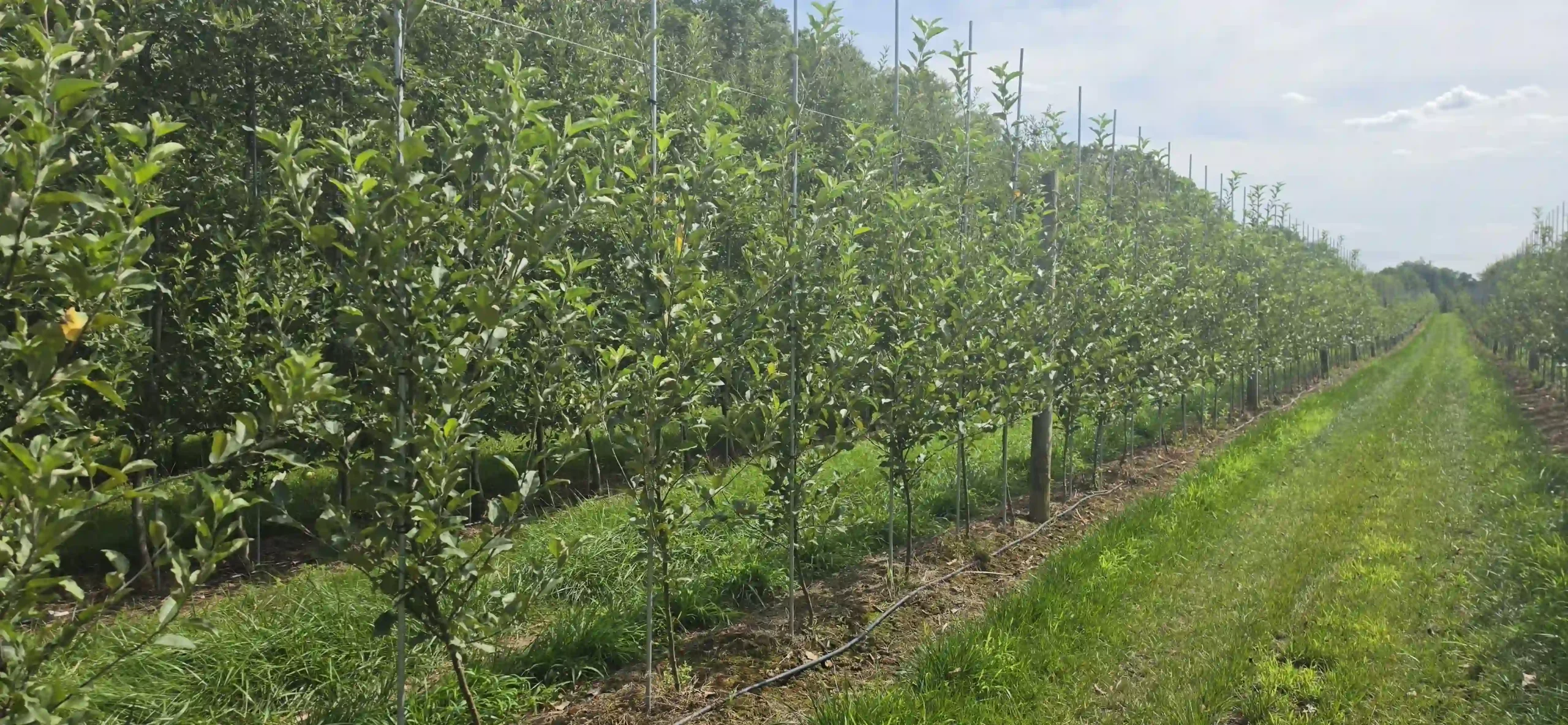
Tree spacing is important for the health and long-term growth of the orchard, but good residential orchard design involves much more than measurements between trees.
When we plan the orchard layout, we consider how the space will look and feel from different points on the property, as well as how someone will move through it. Tree spacing, sightlines, access and the relationship between the orchard and nearby gardens or outdoor living areas all become part of the plan.
Should the layout feel formal and structured, or would a softer arrangement better complement the surrounding Bucks County landscape? Where should the primary walking route be? Will equipment need access? How will the orchard connect to the house, gardens, pool, terrace or other areas of the property?
Property size also plays an important role in orchard design.
A home orchard does not need dozens of trees to create an impact. A thoughtfully designed grouping can establish rhythm and structure in the landscape while still providing enough room for circulation, maintenance and future growth.
This is one reason we recommend developing the home orchard layout before purchasing trees.
Planning Orchard Pathways and Access
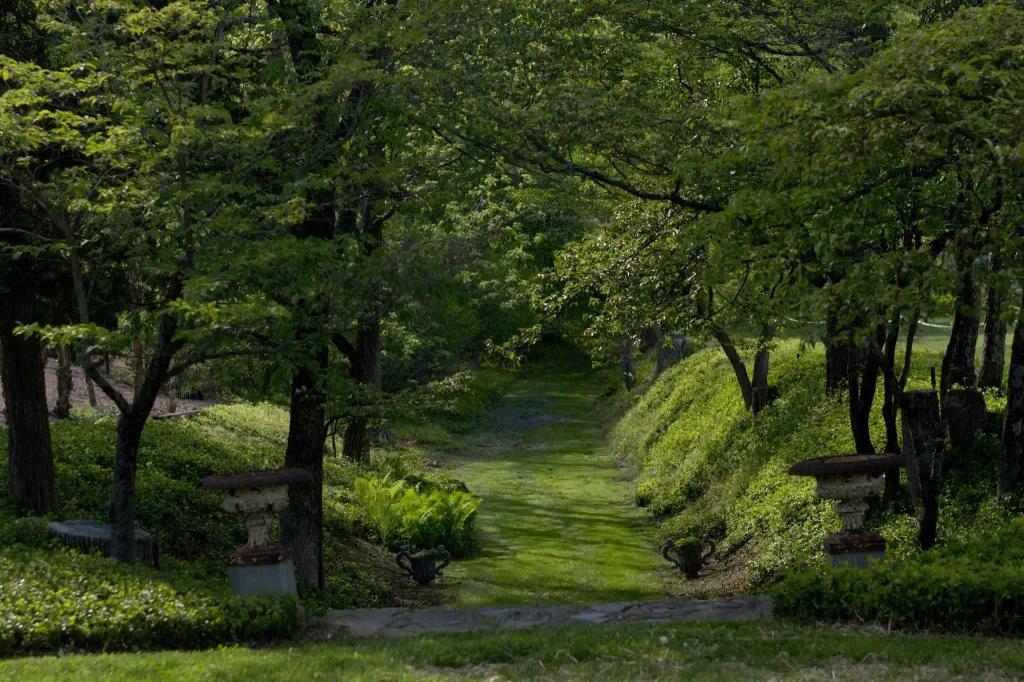
Paths are one of the most easily overlooked parts of home orchard design.
A pathway may be as simple as maintaining grass between the trees, or it may become a more defined walkway that connects the orchard to another area of the landscape.
The best solution depends on the property and how the orchard will be used.
When we plan circulation through an orchard, we think about how the space will actually be used: from everyday walks through the trees to mowing, maintenance, moving equipment and eventually carrying harvested fruit back toward the house.
Those practical considerations can have a surprisingly large influence on the finished landscape.
When orchard circulation is planned well, the space becomes more enjoyable to use. You are no longer simply maintaining trees; you are moving through another garden within your property.
Planning Irrigation for a Home Orchard
Irrigation should be considered during the home orchard design process, not after the trees have already been planted.
Newly planted trees require consistent water while their root systems become established, and irrigation is much easier to incorporate when it is planned along with the overall landscape.
The irrigation needs of a residential orchard can vary depending on the soil, slope, size of the planting, number of trees and the surrounding landscape.
This is also an area where bringing in the right specialist matters.
When we are planning a home orchard, irrigation is part of the conversation from the beginning. We consider where the orchard will be located and how it relates to the larger landscape, then coordinate with Kelly Grow Turf, our affiliated irrigation and turf-care company, to develop the appropriate watering system for the site.
The landscape designer and irrigation specialist are considering different parts of the same plan. PLANT looks at how the orchard fits within the overall landscape, while the irrigation expert determines the most effective way to deliver water throughout the planting.
Planning those systems together from the beginning creates a much more cohesive result.
Designing a Deer-Resistant Home Orchard in Bucks County
Deer pressure is a reality for many Bucks County homeowners, which means wildlife protection needs to be part of the orchard design conversation from the beginning.
Waiting until deer damage occurs can limit the available solutions and make protection feel like an addition rather than part of the original landscape.
Depending on the property, fencing may be the most practical approach. On other sites, the orchard may be incorporated into a larger protected garden or landscape area.
The important thing is that protection needs to work visually as well as functionally.
A fence that protects the trees but dominates the entire landscape may not be the best design solution.
When we plan an orchard on a property with significant deer pressure, we consider protection at the same time we are developing the orchard layout. Fencing, pathways, surrounding plantings and views from the house should be considered together so that wildlife protection feels like part of the landscape rather than something added later.
Making a Home Orchard Part of the Landscape
A residential orchard does not have to stand by itself in the middle of a lawn.
One of the most rewarding parts of orchard landscape design is finding ways to connect the trees to the rest of the property.
When we design an orchard as part of a larger residential landscape, we also consider what happens around it. A path leading into the orchard, a nearby garden, a shaded bench or a small gathering area can change the orchard from a place you simply maintain into a place you actually use and enjoy.
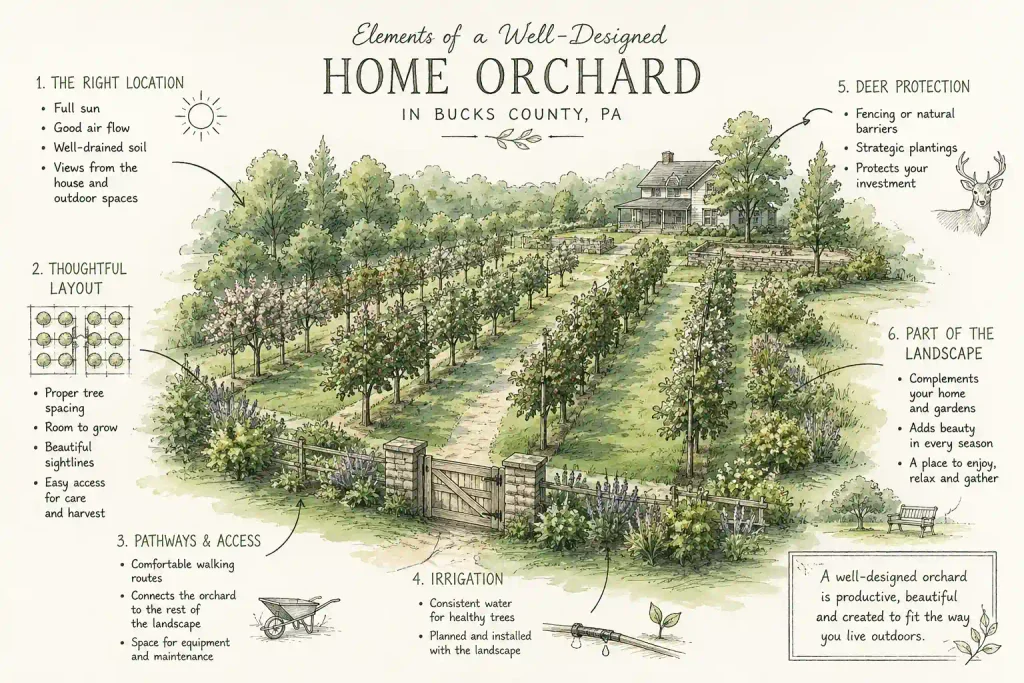
The orchard may also frame a long view, create a transition between different parts of the property or become a beautiful focal point when viewed from the house. Nearby planting beds can add seasonal interest and help connect the orchard to the larger landscape.
There is also an opportunity to think beyond the orchard trees themselves.
Pollinator-friendly plantings and surrounding gardens can bring additional life and seasonal interest to the space while helping the orchard feel connected to the larger landscape.
Spring blossom may be one of the most anticipated moments in an orchard, but thoughtful landscape design can help the space remain beautiful throughout the year.
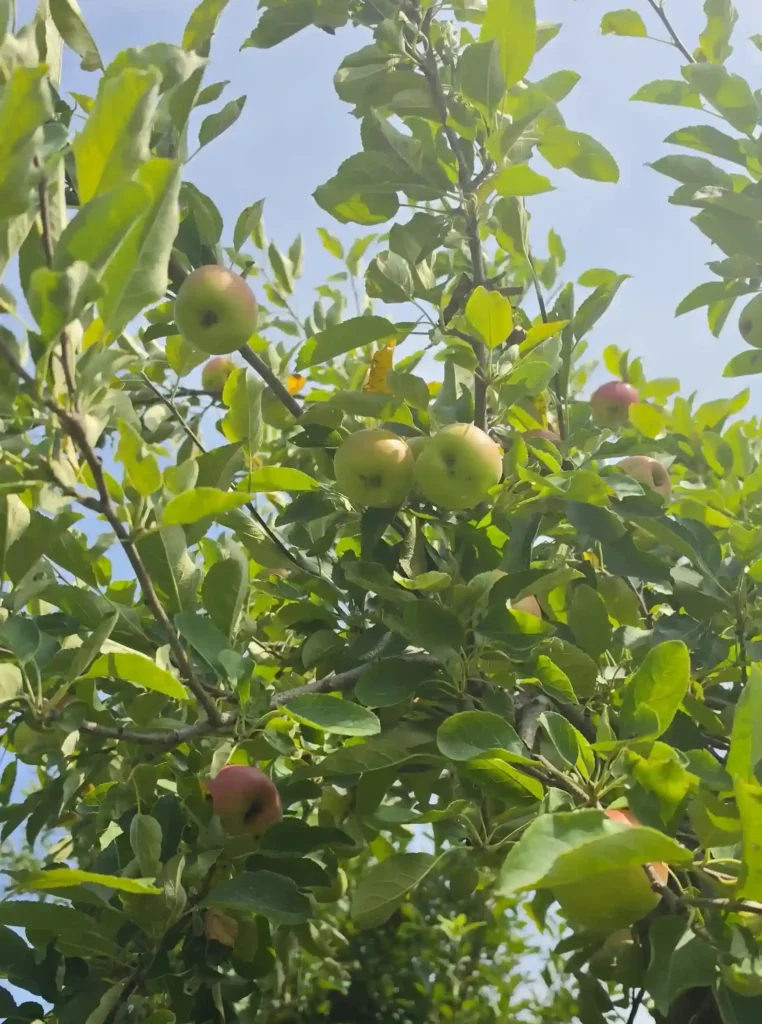
Designing the Orchard Around Views From the House
When we plan a home orchard, we study how it will be seen from the places the homeowner uses most. A kitchen window, terrace, pool, garden path or outdoor living area can all influence the orchard’s placement and orientation.
Imagine looking from a kitchen window in spring and seeing rows of flowering trees.
Or sitting on a terrace in summer with the orchard becoming part of the view.
Or following a garden path that gradually leads you toward the trees.
These relationships are what transform separate landscape elements into a cohesive property.
A well-designed orchard becomes something you experience even when you are not standing inside it.
Choosing Fruit Trees for a Home Orchard in Bucks County
Tree selection is an important part of residential orchard planning, but it deserves its own conversation.
Property size, available space, pollination requirements, maintenance expectations and the goals of the homeowner can all influence which fruit trees ultimately belong in the landscape.
Rather than trying to cover that entire subject here, our next orchard blog will focus specifically on choosing fruit trees for a home orchard in Bucks County, including considerations for different property sizes and landscape settings.
For now, one of the most important principles is simple:
Design the orchard first, then select the trees that fit the plan.
It is much easier to choose trees that work within a thoughtful landscape design than to redesign a property around trees that have already been purchased.
Designing a Home Orchard With PLANT Design Group
A home orchard is a perfect example of where horticulture and landscape design come together.
The trees matter, but so do sunlight, drainage, orchard layout, pathways, irrigation, wildlife protection, surrounding gardens and the relationship between the orchard and the rest of the property.
That is the approach we take at PLANT Design Group when designing residential orchards in Bucks County.
We are not simply asking where a few fruit trees can fit.
We are asking:
Where does the orchard belong on this property?
When that question is answered thoughtfully, a home orchard can become much more than a productive part of the landscape. It can become one of the places that gives the property its character.